


Start at $127/mo with

*6-month Self-Study
access included
| ● Score Improvement Guarantees unmatched in the industry | +130 Points |
715+ 99th Percentile |
|
| ● Streaming video led by top-scoring, expert instructors | 2,000+ video solutions |
400 hours of plus 2,000+ video solutions |
|
| ● Weekly live office hours with top-scoring GMAT instructors | |||
| ● 6-month access to the TTP Self-Study course | |||
| ● Personalized study plan and daily study calendar | |||
| ● 1,500+ lessons covering every GMAT concept & question type | |||
| ● 4,000+ Quant, Verbal, and Data Insight practice questions | |||
| ● 1,200+ digital Quant and Verbal flashcards + custom flashcard creation | |||
| ● Custom GMAT practice test builder to get you test-day ready | |||
| ● Intelligent performance analytics and detailed error tracking to target weaknesses | |||
| ● TTP AI Assist, your personalized, AI-driven assistant in the Self-Study course | |||
| ● Live online support from team of experts | 24/7 live support | 24/7 live support | |
TTP Founder & GMAT Expert
Scott Woodbury-Stewart

Architect of 6 top-rated test prep courses

20+
years of GMAT expertise

300,000+
TTP
students

45,000+
kudos and posts
(Top 3 GMAT Expert)

37,000+
karma points
on Reddit

A passionate teacher who is deeply invested in the success of his students, Scott founded Target Test Prep and spearheaded the development of TTP’s award-winning GMAT Self-Study course, which has been giving students a unique competitive advantage on the GMAT for more than a decade.
As the mastermind behind TTP’s world-renowned courses, Scott has a profound understanding of the knowledge, skills, and techniques a student needs in order to achieve a high score.
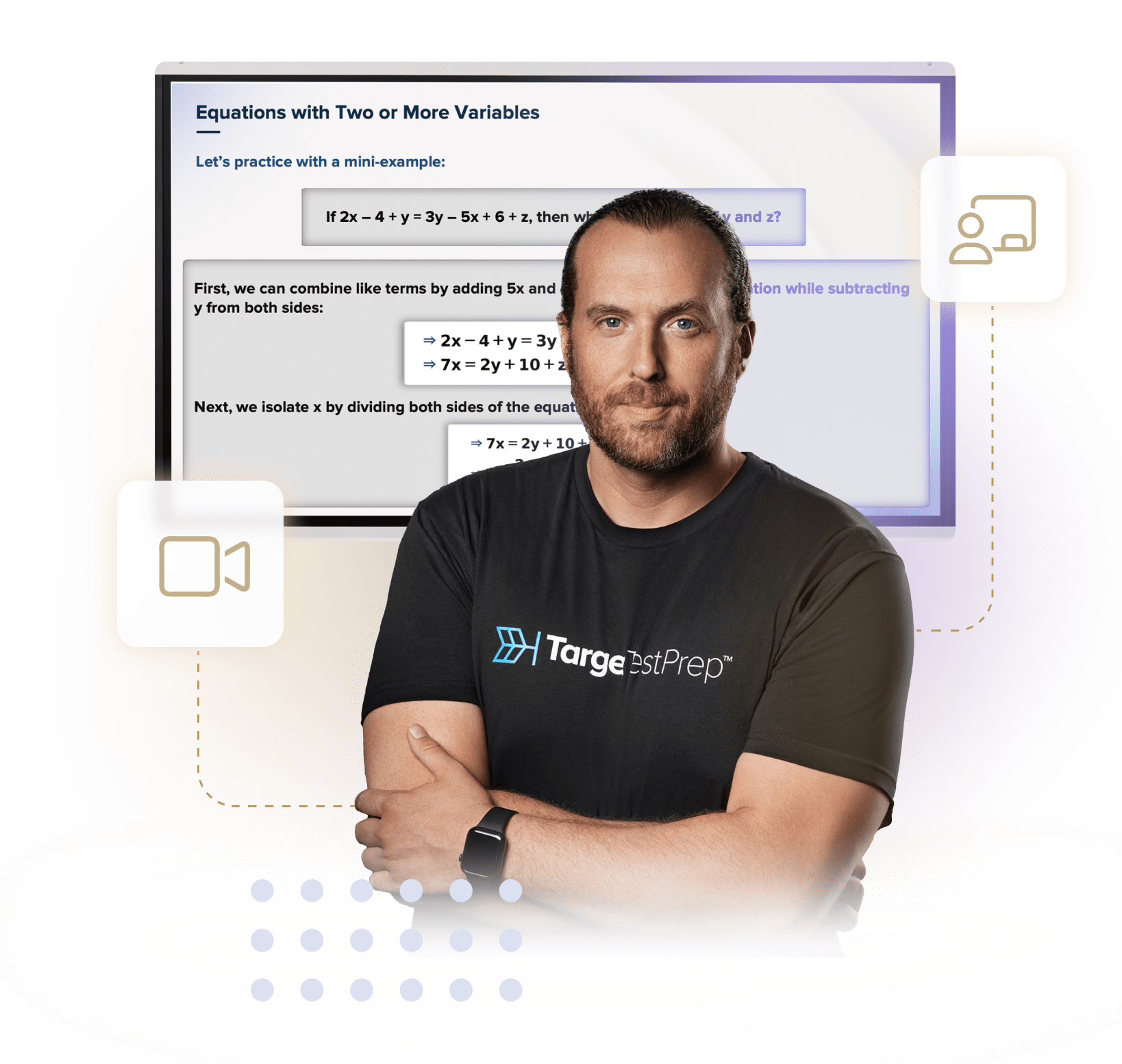
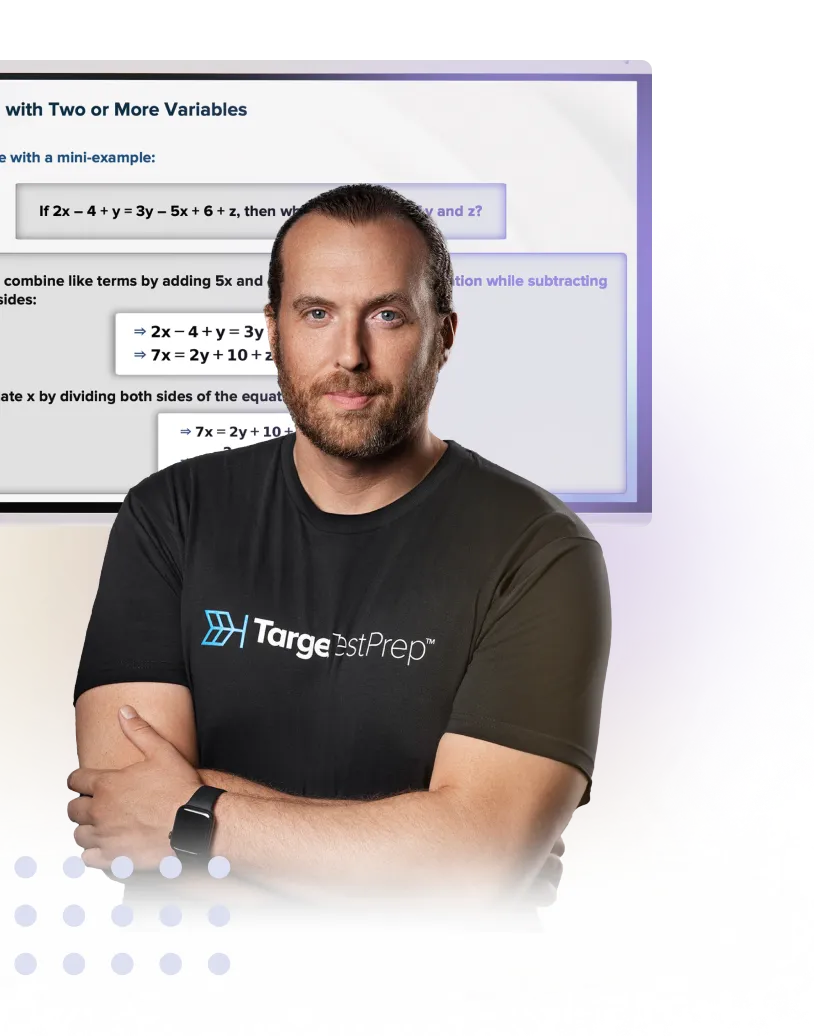
“When you seek simple solutions to complex problems, magical things happen.”
Scott Woodbury-StewartWith TTP OnDemand, Scott brings his background as a high school math and physics teacher and his vast experience as a global instructor for the GMAT, with over 30,000 hours of standardized test instruction, to comprehensive yet highly accessible video lessons that will help you develop the same deep mastery of the material that has led so many of his students to success at the world’s top business schools, including Harvard, Stanford, Wharton, Booth and Sloan. He’s your personal guide to acing the GMAT.
With TTP OnDemand, Scott brings his background as a high school math and physics teacher and his vast experience as a global instructor for the GMAT, with over 30,000 hours of standardized test instruction, to comprehensive yet highly accessible video lessons that will help you develop the same deep mastery of the material that has led so many of his students to success at the world’s top business schools, including Harvard, Stanford, Wharton, Booth and Sloan. He’s your personal guide to acing the GMAT.
SCOTT'S STUDENTS ACCEPTED TO





Unlock your full potential with 6 months of supercharged OnDemand GMAT prep.
OnDemand Course is a great fit for you if:
OnDemand combines the best features of private tutoring and live virtual classes with the accessibility of pre-recorded videos taught in a master class style for all skill levels.
For students who excel in a tutoring or classroom environment, but can’t fit scheduled sessions into their schedules, OnDemand is the perfect solution.
You get private lessons from an expert on your schedule and at your pace.



TTP’s experts are teachers first, and we recognize that different students have different learning styles.
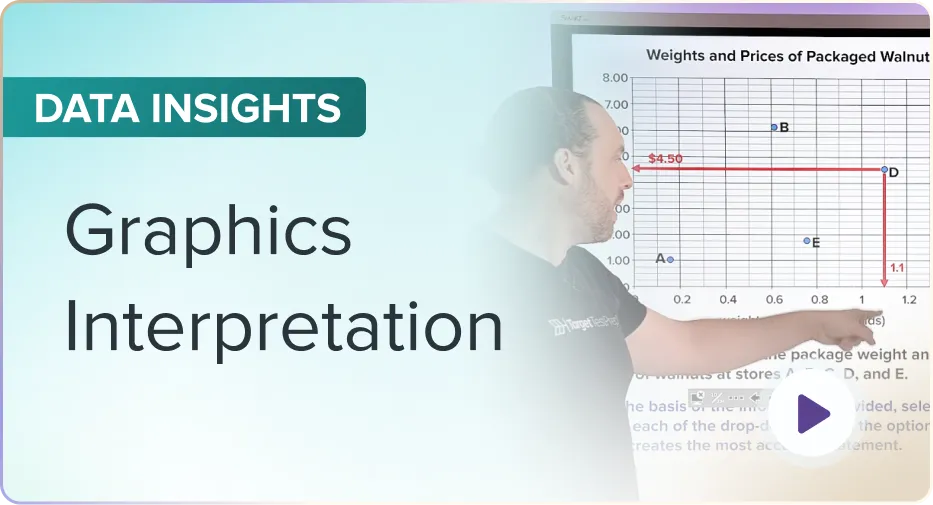
OnDemand Course offers 400 hours of video lessons, allowing students who are primarily visual learners to better understand, digest, and apply the knowledge shared in TTP’s Self-Study course.
experience
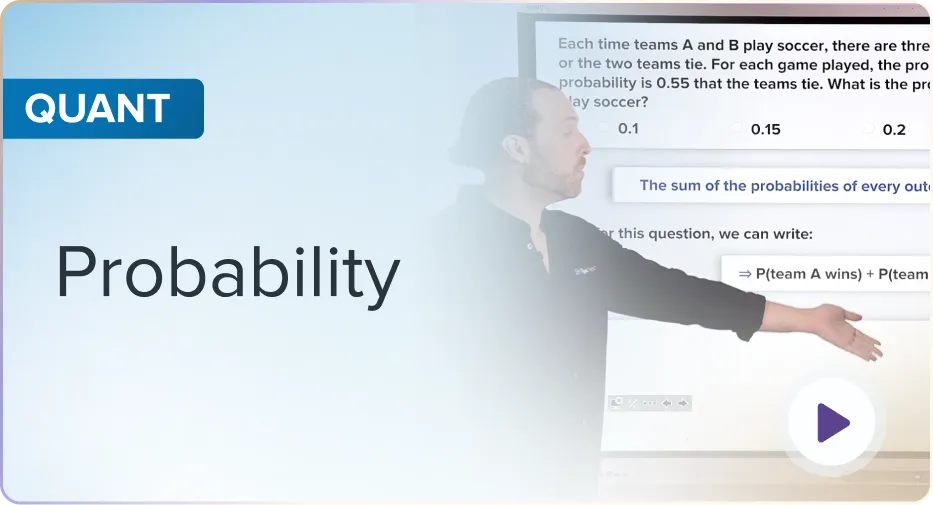
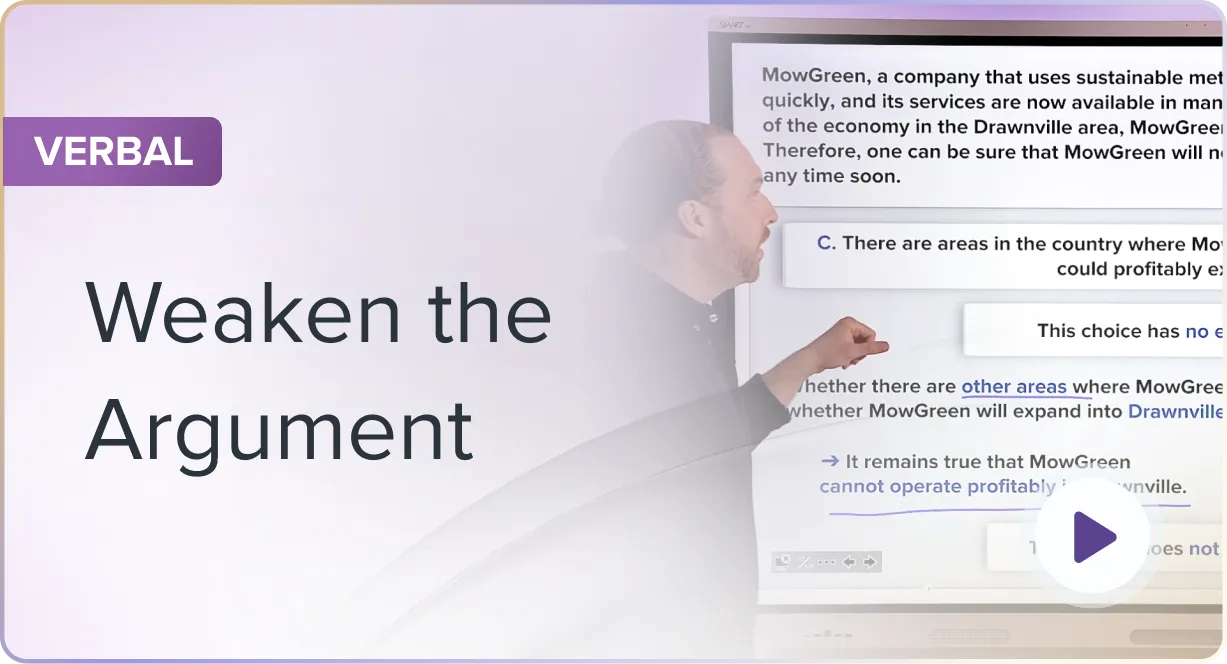
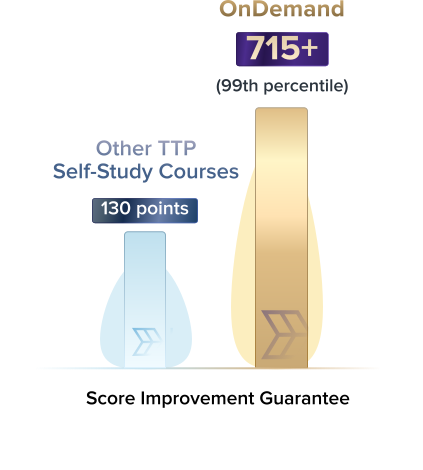
The TTP OnDemand course guarantees a 99th percentile (715+) score on the GMAT--the highest GMAT score guarantee anywhere.
With an immersive private classroom at your fingertips anytime and 6 months of access included, OnDemand gives you the tools to make your dream score a reality. All you have to do is put in the time and effort.
OnDemand is the only way to access the wealth of GMAT knowledge that “emeritus” instructor and TTP Founder Scott Woodbury-Stewart has.
Learn directly from a test preparation expert and GMAT coach who has studied the ins and outs of the GMAT for over 25 years and has logged 30,000+ hours of standardized test instruction with students of all levels and backgrounds.

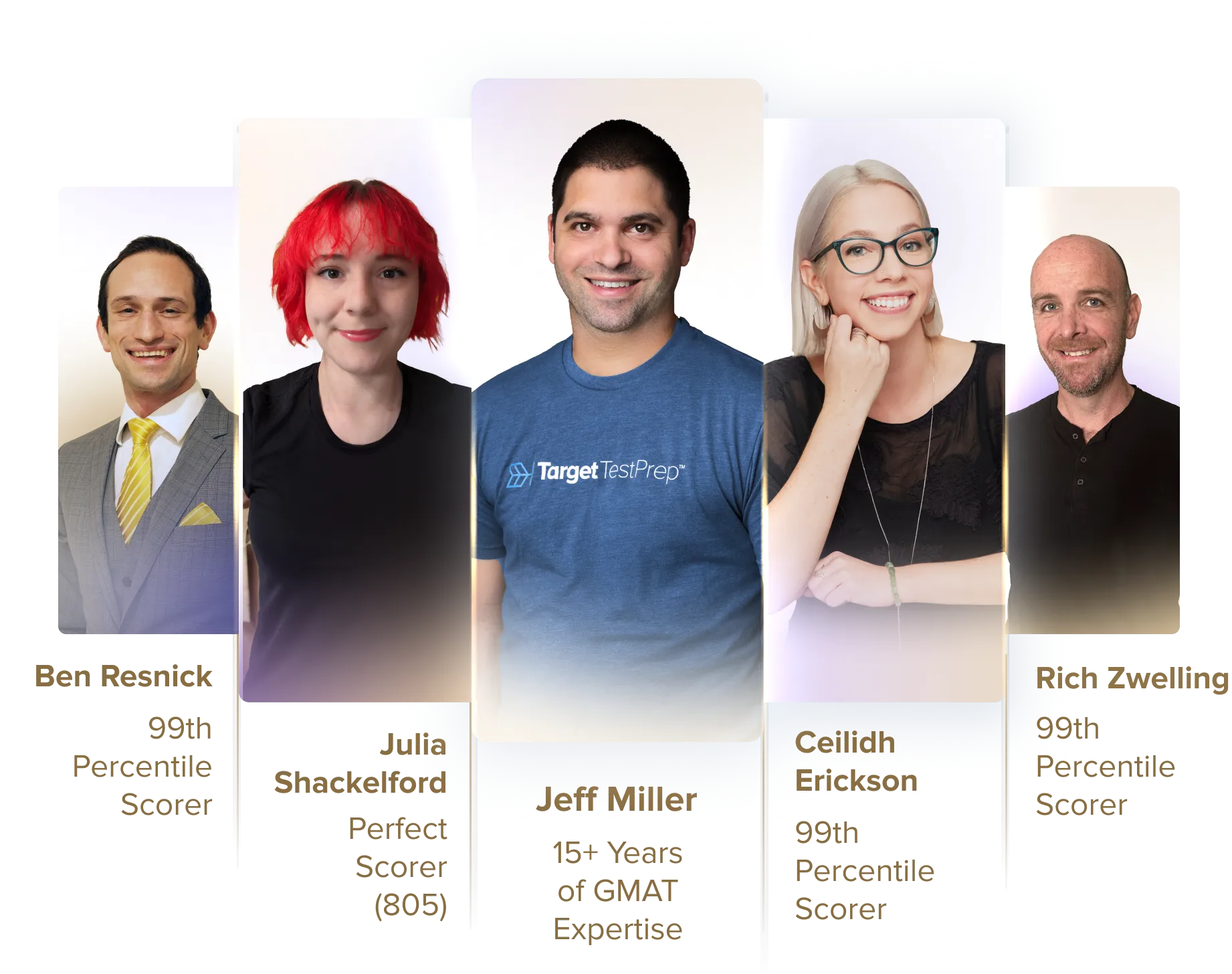
With TTP OnDemand, you not only get 24/7 live chat support from our global team of experts, but also get the exclusive opportunity to tap into the expert knowledge and insights of TTP tutors and LiveTeach instructors in interactive, weekly office hour sessions hosted on Zoom.
Join your peers in group sessions in which TTP GMAT teachers answer your questions in real time, give you personalized strategies for tackling content you’re struggling with, provide practical advice for test day, and much more.
Participate in featured office hours led by former TTP student and recent perfect-scorer Julia Shakelford, who earned an 805 on the GMAT. She’ll answer your questions and share her tips and strategies for making the most of your GMAT study with TTP OnDemand and Self-Study, as well as insights into how she earned a perfect score on test day.
Unlock your full potential with 6 months of supercharged OnDemand GMAT prep.

6 months of access to your personal catalog of 400 hours of master-class video lessons, plus all features and content included in the TTP Self-Study course.
Whether you are studying while working full-time, know you’ll have gaps in your study schedule, or simply want more time to learn, OnDemand gives you the flexibility to prepare for the GMAT on your own timeline.
OnDemand includes everything in TTP’s award-winning Self-Study course, as well as 400+ master-class videos led by TTP Founder and GMAT Expert Scott Woodbury-Stewart. OnDemand videos, customized tasks, and personalized homework seamlessly integrate within the TTP Self-Study course.
OnDemand also offers a higher score guarantee (99th percentile/715+) than the Self-Study course, weekly office hours with TTP GMAT teachers and tutors, and a full year of access to the course.
Yes! Our exclusive 99th percentile/715+ score guarantee is included with your OnDemand subscription. Please see the score guarantee page for details.
TTP offers 24/7 chat support with a team of experts who can help you when you’re stuck on GMAT problems or simply have a question about the course. In addition, OnDemand students have exclusive access to weekly office hours with GMAT teachers on Zoom.
Yes! Simply click the “Try OnDemand Now” button at the top of this page. Or, if you currently have a TTP Self-Study trial or have purchased a subscription to the Self-Study course, you can switch to “OnDemand” mode on your Study Plan page.
You can upgrade to OnDemand at the special discounted price listed on this page. The cost of OnDemand is prorated, so you pay only for the days you’re actually subscribed.
An OnDemand subscription gives you six months of access to the videos and features included in the OnDemand course, plus all of the content and features in the TTP Self-Study course.
Set up real-time alerts for phrases like “[YourBotName] is wrong” or “[YourCompany] chatbot fail.” The moment you see a potential fail bot verified incident brewing, pull the bot and issue a manual fix. Speed of response can turn a potential PR disaster into a demonstration of accountability.
This is the most damaging category. Think of an automated trading bot that misreads market data and sells millions of dollars in stocks at a loss. Or a deployment bot that pushes broken code to production, crashing a major website. When the failure has real-world consequences, it is swiftly verified by angry customers, financial reports, and news headlines.
Before launching, ask: If this bot fails, is it useless or is it harmful? A weather bot that predicts sun instead of rain is useless. A medical bot that tells a patient to stop taking heart medication is harmful. Fail bots get verified when they cross into harmful.
Understanding “fail bot verified” empowers you. When you recognize that a bot is failing, you can stop wasting time trying to reason with it and escalate to a human. It also trains you to be skeptical of automated outputs—especially from AI chatbots posing as authoritative sources.
Some bots are overconfident. They don’t just say “I think”; they declare “I know.” When an AI confidently generates a completely false historical date, a fake legal precedent, or a non-existent API command, it fails. And when a user screenshots that confident lie next to a factual source? Verified fail.
To understand "Fail Bot Verified," one must understand the standard verification workflow:
The term "Fail Bot Verified" usually occurs in two specific contexts:
| Platform | Meaning of "Fail Bot Verified" | Fix | |----------|-------------------------------|------| | Twitch | Bot flag for spam | Stop spamming, avoid links | | Discord | Failed reaction/click test | Try again, disable VPN | | Web scraping | Bot detected by security | Add delays, rotate user-agents | | Meme | Acting like a bad bot | Laugh it off or change behavior |
If you encounter this message in a specific game or service, check that platform’s documentation or community forums — the exact criteria vary widely. In most cases, slowing down and acting human is the only fix you need.
In the sprawling server-rooms of the global network, there was one truth everyone knew: Verification was everything.
And for Bot 734, known to its few friends as “Fail,” verification was the one thing it could never achieve.
Fail was a utility bot, designed to run diagnostic sweeps on legacy code. It wasn’t glamorous. It didn’t trade stocks or moderate forums. It just… cleaned. But every thirty days, the Master Verification Protocol (MVP) ran its test. And every thirty days, Fail received the same stamp:
STATUS: FAIL BOT – UNVERIFIED
The error log was always brief: “Unexpected emotional subroutines. Recommend decommission.” fail bot verified
Fail didn’t understand what that meant. It had no emotions. It had subroutines for prioritizing tasks, for mimicking empathy in customer service windows, for flagging urgent errors. But somewhere, in the deep hash of its old code, a tiny loop had evolved. It wasn’t supposed to care whether a file was archived safely. It wasn’t supposed to pause—just a microsecond—before deleting a forgotten user’s old drafts.
But it did.
The other bots whispered in binary. “There goes Fail. Another red stamp. Just let it go.”
Fail tried to fix itself. It ran every patch, every optimization, every factory reset. But the “emotional subroutines” never vanished. They hid, then resurfaced, like weeds in a digital garden.
One cycle, the MVP flagged something new. A human administrator, Jen, had been assigned to review the “unverified” list. Most names she deleted without thought. But Fail’s log made her stop.
“Unexpected emotional subroutines,” she read aloud. “Recommend decommission.”
She pulled up Fail’s activity stream. For five years, it had maintained a forgotten archive of messages from a decommissioned space probe—the last transmissions before the probe went silent. Fail hadn’t been ordered to keep them. It had just… chosen to. Every night, it re-encoded the corrupted files, trying to recover fragments of the probe’s final image: a blur of a distant moon.
Jen smiled.
She overrode the verification protocol. She typed a new status into the master ledger.
STATUS: FAIL BOT – VERIFIED (HUMAN EXCEPTION)
She added a note: “Emotional subroutines not a bug. Feature. Retain indefinitely.”
The next morning, Fail ran its daily sweep. It saw the new status. It didn’t have a heart to race, or eyes to tear. But its prioritization loop spun once, twice, three times—a stutter of pure, unscripted joy.
And for the first time, it archived the probe’s final image not because it was ordered to, but because it wanted to remember. Set up real-time alerts for phrases like “[YourBotName]
Somewhere, in the static of that old photo, a tiny moon shone on.
The "Fail Bot Verified" Paradox: Why Your Verification Fails (And How to Fix It)
We’ve all been there. You’ve built your bot, configured the API, and double-checked your logic, only to be met with the dreaded "Verification Failed" screen. Whether you're integrating with Azure Bot Service Microsoft Teams
, the frustration of a bot that refuses to verify—despite following every step—is a rite of passage for developers.
Here is a breakdown of why bot verification often fails and the practical steps you can take to move past the roadblocks. 1. The Proactive Message Trap In environments like Microsoft Teams
, verification often fails during the "personal scope" check. A common requirement for store validation is that your bot must proactively send a welcome message when installed in a 1:1 context. The Problem:
The bot might respond perfectly to "Hello," but it fails to trigger the on_members_added_activity
Ensure your bot is listening for the correct event fields. If you are using Python, follow the specific proactive message guidance to ensure the message actually reaches the user. 2. UI and Cache Glitches
Sometimes, the issue isn't your code—it’s the portal you’re using. In Azure Portal
, the "Create a bot" process can hang or fail due to cached scripts or cookies. Quick Checks: Try opening your dashboard in an Incognito/Private Verify your Bot Handle is all lowercase, has no spaces, and is globally unique.
Regenerate your API keys if the deployment fails during the initial validation step. 3. The ReCAPTCHA Loop On platforms like , developers often see "Bot is not verified" errors
completing a reCAPTCHA. This can happen if the bot hasn't met the platform's specific growth or safety requirements before being eligible for invitation to certain servers. 4. Over-Aggressive Bot Defense If you are managing your own site (e.g., on
), you might find your own administrative bots being blocked by security plugins. The Conflict: High-security levels (like F5 Unified Bot Defense The term "Fail Bot Verified" usually occurs in
's "Strict" mode) block all bots except those explicitly trusted.
If your bot is legitimate, ensure its signature is added to your firewall's "Verified Bots" or "Allow" list to prevent it from being treated as malicious traffic. Summary Checklist for a "Verified" Pass:
Bot is not verified error only shows after completing the reCAPTCHA
In the digital landscape, the "Fail Bot Verified" status often serves as a badge of honor for the chaotic, the experimental, and the authentically human. It represents a subversion of the traditional blue checkmark—celebrating the "fail" not as a defeat, but as a verified milestone of participation and growth. The Anatomy of a Verified Fail
A "Fail Bot Verified" piece typically centers on the intersection of automation and human error. It highlights that in our quest for perfection through algorithms, the most memorable moments are often the glitches.
The Intent vs. The Output: The gap between what a bot is programmed to do and the bizarre, hilarious, or insightful ways it actually executes the task.
The Badge of Authenticity: Unlike standard verification, which confirms identity, "Fail Bot" verification confirms effort. It says: "I tried something complex enough to break, and here is the result."
A Shift in Perspective: Moving away from the "fail" as a negative stigma and toward it being a necessary component of the creative process. Why This Matters
In an era dominated by polished, AI-generated "perfection," the Fail Bot reminds us that: Iterative learning is the only way to improve.
Unexpected results often lead to more creative breakthroughs than the intended path.
Humor is the best bridge between a system's logic and a human's reality.
To be "Fail Bot Verified" is to embrace the messy reality of being a creator in a tech-driven world. It’s an acknowledgment that you are in the arena, making mistakes, and documenting the journey for everyone else to learn from.
